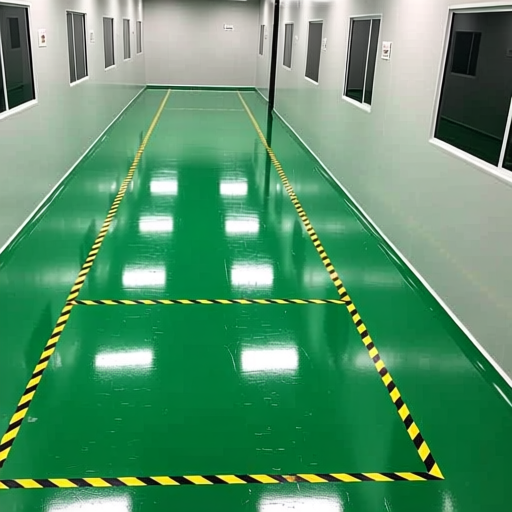
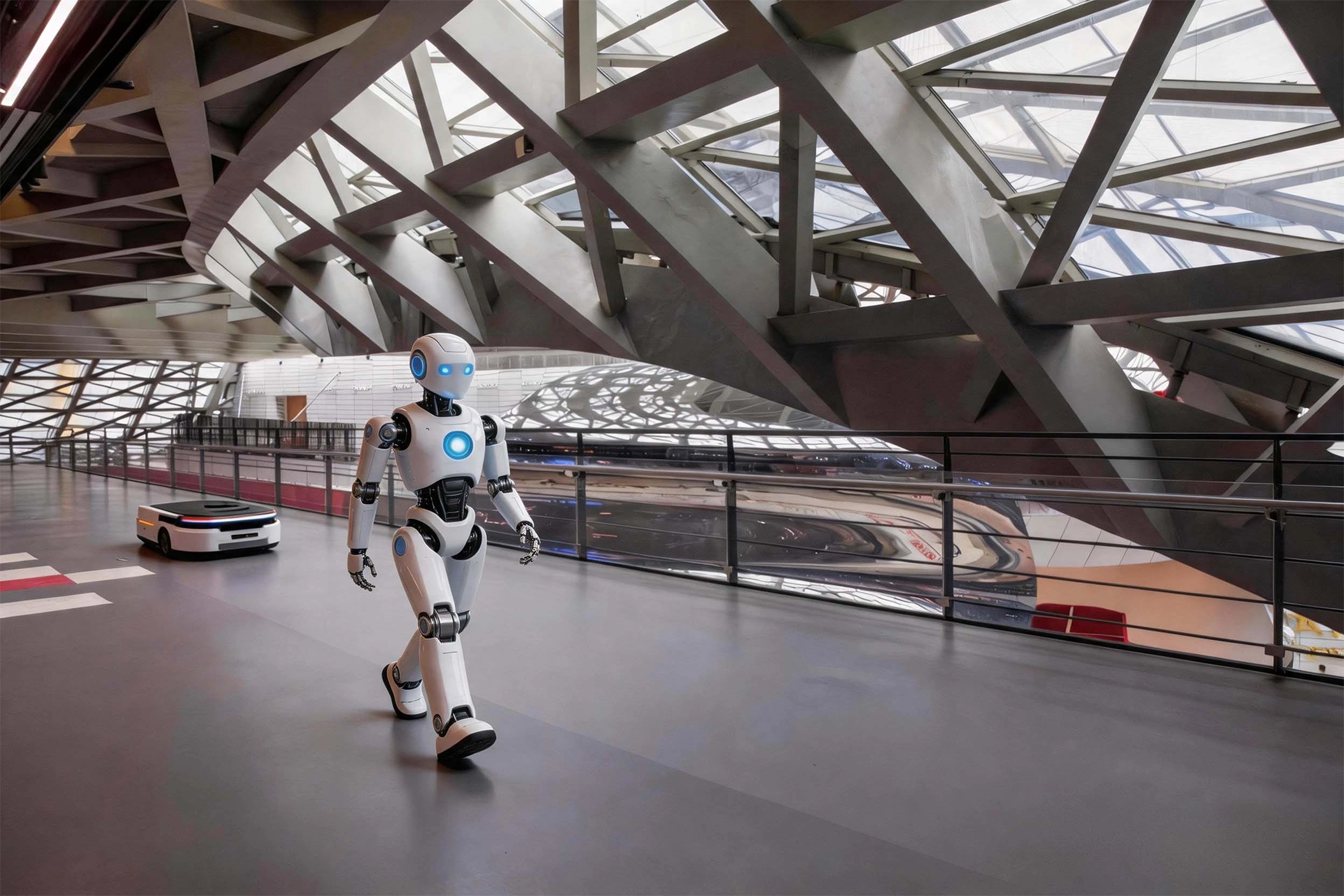
With the rapid adoption of smart factories and automated warehousing, AGVs (Automated Guided Vehicles) are being deployed on a large scale. The operating characteristics of AGVs — heavy-load travel, high-frequency turning, and precision positioning — impose entirely new technical requirements on industrial flooring. This article outlines core AGV flooring indicators and mainstream flooring categories, and shares Simon's compatible solutions for industry reference.

1. Floor Flatness
Flatness directly impacts AGV travel and navigation accuracy.
· Magnetic navigation, standard laser navigation: 2m straightedge, deviation ≤ ±3mm
· Visual navigation, high-level stacking AGVs: 2m straightedge, deviation ≤ ±2mm
· Floor expansion joints and cut joints should be controlled within 3mm width, with flexible treatment of gaps; offsets are strictly prohibited.
2. Wear Resistance and Shear Resistance
AGVs perform prolonged zero-radius turns and repeated rolling — flooring must have good hardness and shear resistance, remaining free of dusting, indentation, and visible scratches during long-term use.
3. Friction Coefficient and Surface Appearance
Dry floor friction coefficient ≥ 0.5, wet ≥ 0.3, balancing anti-slip performance with smooth travel. Prioritize matte finishes to prevent strong light reflections from interfering with sensors and visual navigation equipment.
4. Structural Load Capacity
Base concrete strength recommended at no less than C30, overall structure stable, preventing later settlement, cracking, and blistering; load capacity matched to AGV fully loaded weight.
5. Anti-Static (Select as Needed)
For electronics, new energy, precision manufacturing and similar zones, floor surface resistance should be controlled at (10^6Ω ~ 10^9Ω) to dissipate static charges promptly. Standard workshops and warehousing do not require anti-static treatment.
6. Stain Resistance, Cleanliness and Temperature Resistance
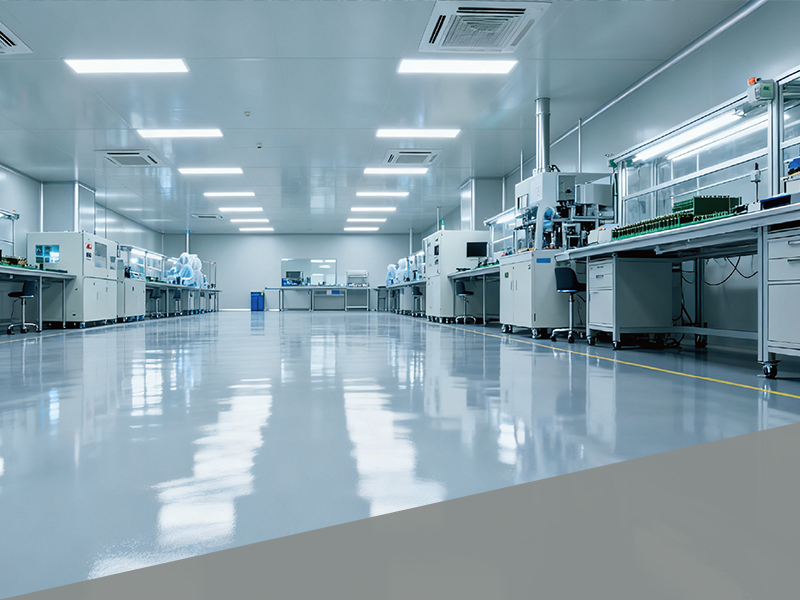
Food, pharmaceutical, and cleanroom workshops require seamless, dense flooring resistant to oil stains, disinfectants, and dust/mold accumulation. Cold storage and high-temperature workshop flooring must withstand temperature differentials without cracking or delamination during thermal cycling.
1. Emery Wear-Resistant + Densifier Flooring
Advantages: High strength, low cost, long service life, good fire resistance — widely used in heavy-load logistics and heavy industrial plants.
Limitations: Difficult to achieve high-precision leveling over large areas; surface prone to dust accumulation; many joints; not well suited for visual navigation AGVs.
Applicable: Heavy-load warehousing and plant corridors with moderate flatness and cleanliness requirements.
2. Epoxy Self-Leveling / Epoxy Color Quartz Flooring
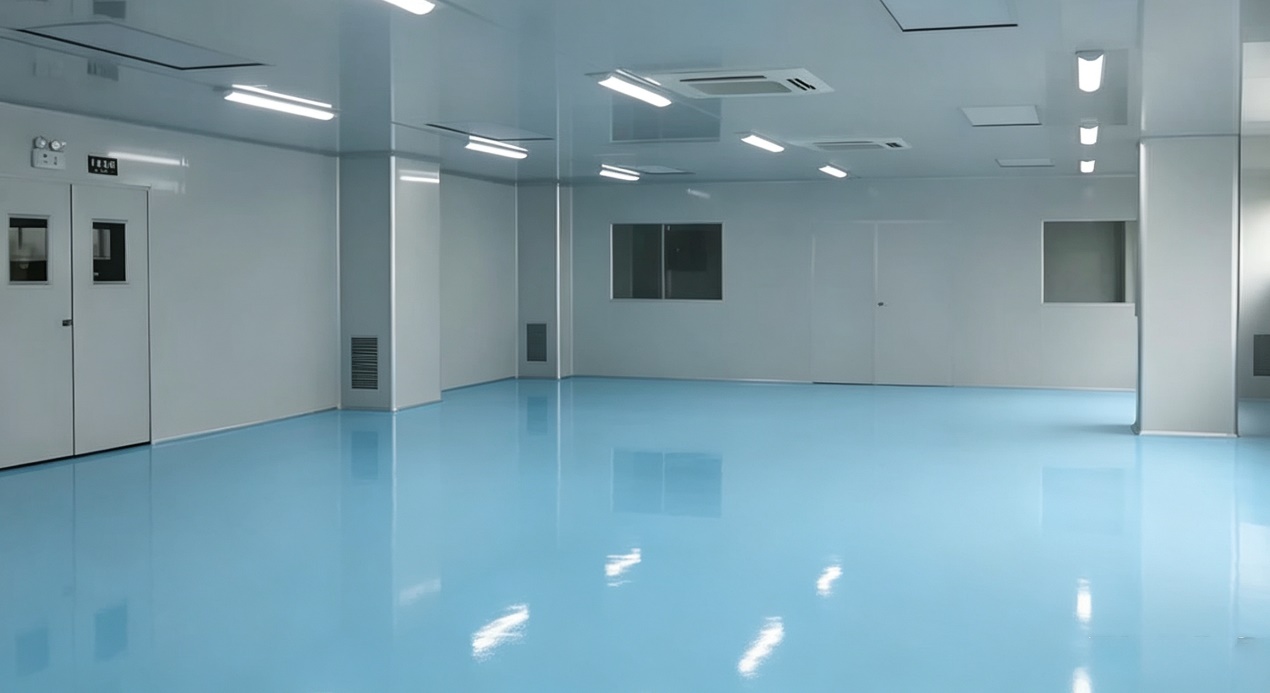
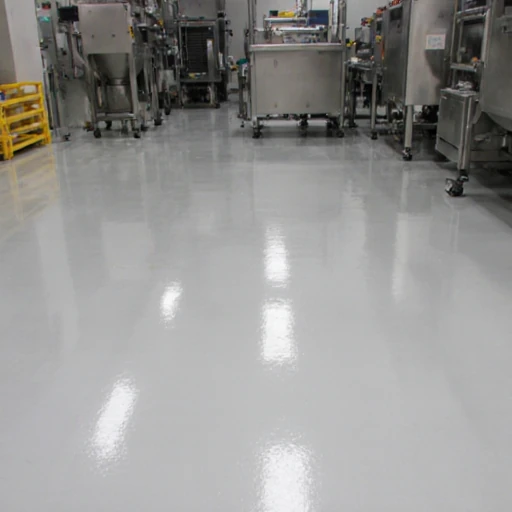
Advantages: Fully seamless, good flatness, easy to clean, rich colors, matte finish available. Epoxy color quartz has better toughness and stain resistance than standard epoxy.
Limitations: Prone to scratching and darkening under sustained heavy loads and high-frequency turning; average temperature, acid and alkali resistance; prone to aging and yellowing.
Applicable: Light AGVs under 1 ton, light industry workshops, ambient-temperature sorting warehouses.
3. Polyurethane Mortar Flooring
Advantages: Seamless monolithic construction, high strength, good toughness, outstanding shear and wear resistance; high/low temperature resistant, chemical corrosion resistant, waterproof and anti-mold, available in anti-static version — commonly used in food, pharmaceutical, and cold chain facilities.
Limitations: Material and construction costs higher than epoxy; higher requirements for substrate and workmanship.
Applicable: Medium-to-heavy AGVs, cleanroom workshops, cold storage, pharmaceutical, new energy, and other high-requirement scenarios.
4. Super-Wear Polyurethane Topcoat
A flooring protective layer that cannot serve as standalone primary flooring. Strong adhesion enhances existing floor wear resistance, scratch resistance, and yellowing resistance; matte surface does not interfere with AGV navigation.
Applicable: Existing floor upgrades, AGV lane reinforcement, extending floor service life.
5. PVC Anti-Static Sheet Flooring
Advantages: Smooth surface, stable anti-static performance, sound-dampening, fast installation.
Limitations: Relatively weak load-bearing capacity; prone to indentation and edge curling under prolonged rolling; numerous seams prone to dust accumulation.
Applicable: Light AGVs, laboratories, precision electronics workshops and other light-load areas.
6. Inorganic Terrazzo Flooring
Advantages: High flatness, seamless, high hardness, wear-resistant and durable, compatible with all AGV navigation types.
Limitations: Long construction period, high cost, structural load requirements; average low-temperature toughness.
Applicable: High-end smart workshops, high-standard unmanned operation zones.
Based on different operating conditions, load capacities, and environmental requirements, Simon offers multiple proven installation systems.
Solution 1: Ambient-Temperature Light AGVs (General Workshops, E-Commerce Warehouses)
Configuration: Epoxy self-leveling + Simon Super-Wear Polyurethane Topcoat
Epoxy base ensures high precision and dust-free environment; polyurethane topcoat enhances wear resistance, effectively withstanding AGV repeated turning and rolling wear. Matte surface does not interfere with navigation, ensuring stable travel.
Applicable Load: ≤ 1 ton.
Solution 2: Medium-to-Heavy AGVs / Special Conditions (Food, Pharmaceutical, Cold Chain, New Energy)
Configuration: Simon Polyurethane Mortar Flooring (compressive strength ≥ 45MPa) + Super-Wear Polyurethane Topcoat (anti-static optional)
Polyurethane mortar offers shear resistance, temperature resistance, corrosion resistance, and anti-mold properties, meeting high-frequency heavy-load and cleanliness requirements; combined with topcoat further enhances protection and reduces long-term maintenance costs.
Applicable Load: 1–8 tons.
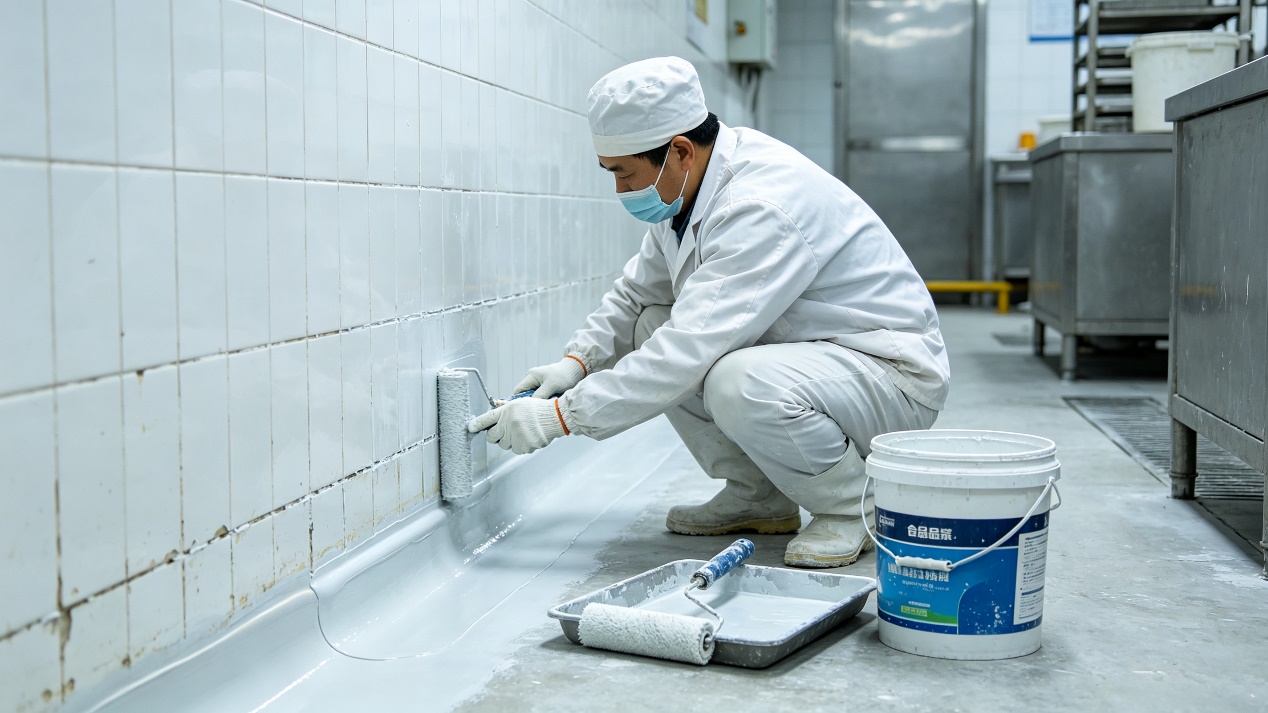
Solution 3: Old Plant Smart Retrofitting
Configuration: Local repair of existing floor + Simon Super-Wear Polyurethane Topcoat
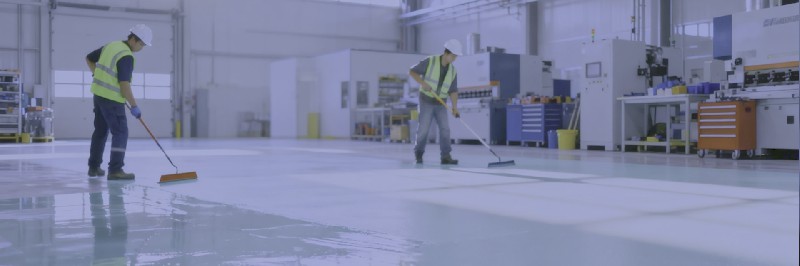
No need for large-scale removal of existing flooring — only repair pits and cracks before overall topcoat application. Flexible construction allowing zoned operations without disrupting normal production, completing AGV floor upgrading at low cost.
1. Ambient-temperature light-duty, standard warehouse sorting: Use epoxy + super-wear polyurethane topcoat for best cost performance;
2. High-frequency heavy-duty, high/low temperature, high-cleanliness scenarios: Prioritize polyurethane mortar flooring system;
3. Electronics, new energy and other static-sensitive areas: Select anti-static polyurethane flooring;
4. Existing floor with wear affecting navigation: Directly apply super-wear polyurethane topcoat for reinforcement.
As smart equipment becomes increasingly prevalent, flooring has become a critical foundation for the stable operation of automated equipment. Simon continuously optimizes flooring products and construction processes, developing tailored solutions for AGV operating characteristics, and providing reliable integrated flooring solutions for smart factories and intelligent warehousing.





 cn
cn