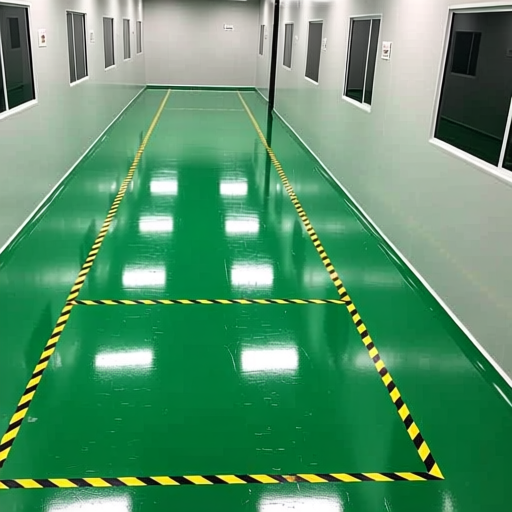
As AGVs become increasingly prevalent in smart factories, unmanned warehouses, and automated workshops, flooring selection directly impacts equipment operating efficiency, maintenance costs, and service life. Based on six key dimensions — AGV load capacity, navigation method, traffic frequency, site environment, cleanliness level, and budget — combined with Simon's proven product portfolio, this guide provides clear selection logic, category comparisons, and practical recommendations to help projects quickly finalize the optimal solution.
Before selection, assess site conditions and use them as evaluation benchmarks:
1. AGV Load Capacity
Light-duty (≤1 ton), medium-duty (1–3 tons), heavy-duty (3+ tons). The greater the load, the higher the requirements for floor strength, crush resistance, and shear resistance.
2. Navigation Type
QR code / visual navigation: Extremely high requirements for flatness and surface reflection — prioritize matte, high-precision flooring;
Laser / magnetic navigation: Moderate flatness standards, focus on wear resistance and joint treatment.
3. Traffic Frequency
Low frequency (a few hundred passes per day): Standard flooring suffices;
High frequency (thousands to tens of thousands per day, frequent turning on the spot): Must enhance wear resistance and shear performance.
4. Operating Environment
Ambient dry, oily workshops, alternating high/low temperatures, cold storage, high-humidity salt spray, chemical corrosion — different environments require different temperature-resistant, corrosion-resistant, and waterproof formulas.
5. Functional Requirements
Regular warehousing: Standard wear-resistant type;
Electronics / new energy workshops: Anti-static configuration required;
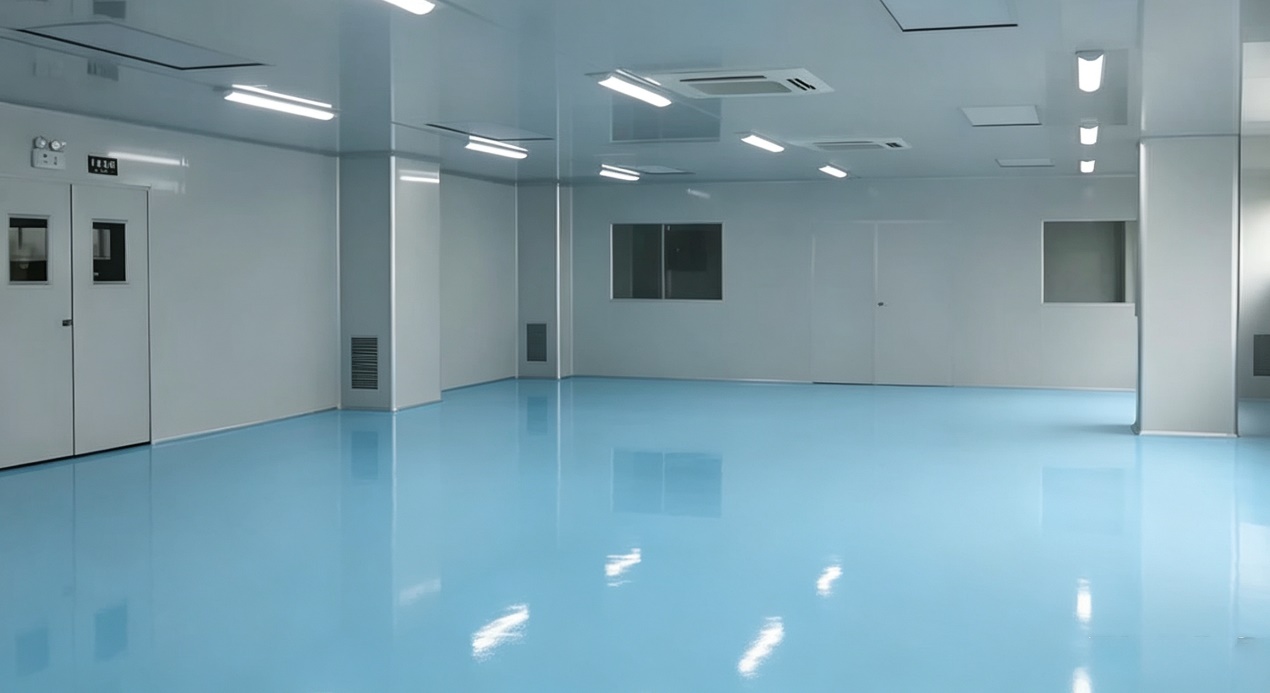
Food / pharmaceutical / cleanroom workshops: Seamless, anti-mold, easy to clean, compliant with cleanroom standards.
6. Budget and Service Life
Short-term use, limited budget: Cost-effective combination solution;
Long-term operation, low maintenance priority: Prioritize high-performance systems to reduce future renovation costs.
Analyze common industry flooring types against AGV operating conditions, with Simon's corresponding solutions noted:
Flooring Type | Core Advantages | Limitations | AGV Compatibility |
Emery Wear-Resistant + Densifier | High strength, low cost, fire-resistant, long service life | Difficult to achieve ultra-high flatness over large areas; surface prone to dust accumulation; many joints; mediocre glare control | Heavy-duty warehousing, heavy industrial plants, outdoor/semi-indoor passages; magnetic-navigation heavy AGVs with no cleanliness or visual navigation requirements |
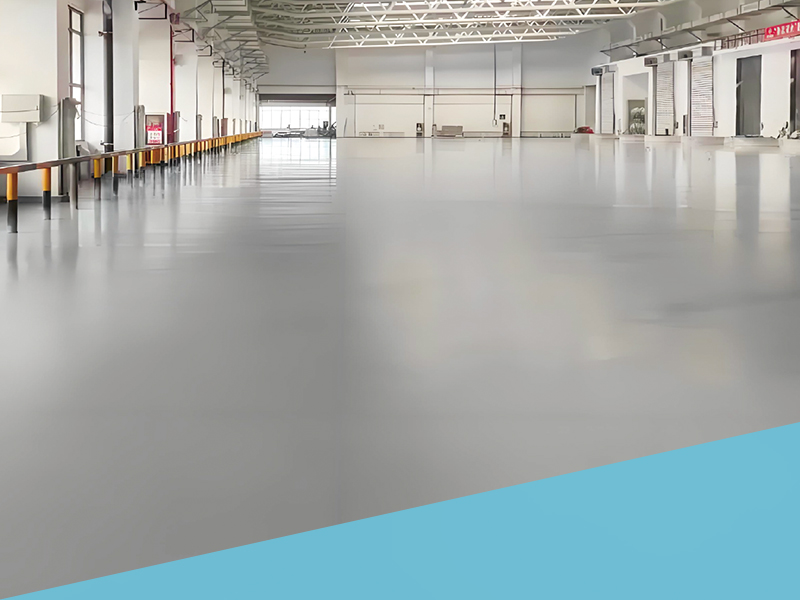
Epoxy Self-Leveling / Epoxy Quartz | Fully seamless, good flatness, rich colors, easy to clean, matte finish available | Prone to scratches and darkening under high-frequency turning and heavy loads; weak temperature and acid/alkali resistance; prone to yellowing over time | ≤1 ton light-duty AGVs, ambient-temperature light industry workshops, e-commerce sorting centers, regular ambient-temperature warehousing |
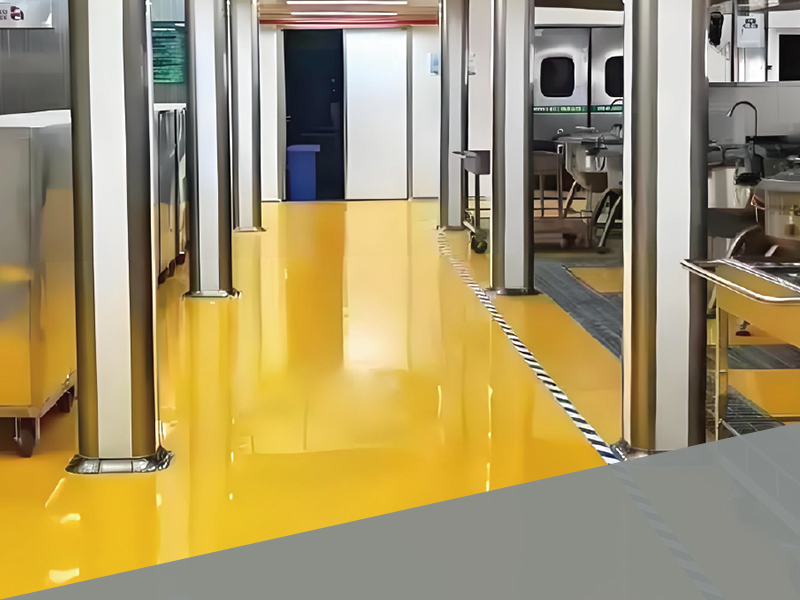
Polyurethane Mortar Flooring | Strong toughness, shear-resistant, high/low temperature resistant, chemical corrosion resistant, waterproof and anti-mold, anti-static capable, fully seamless | Higher material and construction costs; strict requirements for substrate and workmanship | 1–8 ton medium/heavy AGVs; food, pharmaceutical, cold chain, new energy, high-cleanliness workshops (mainstream preference) |
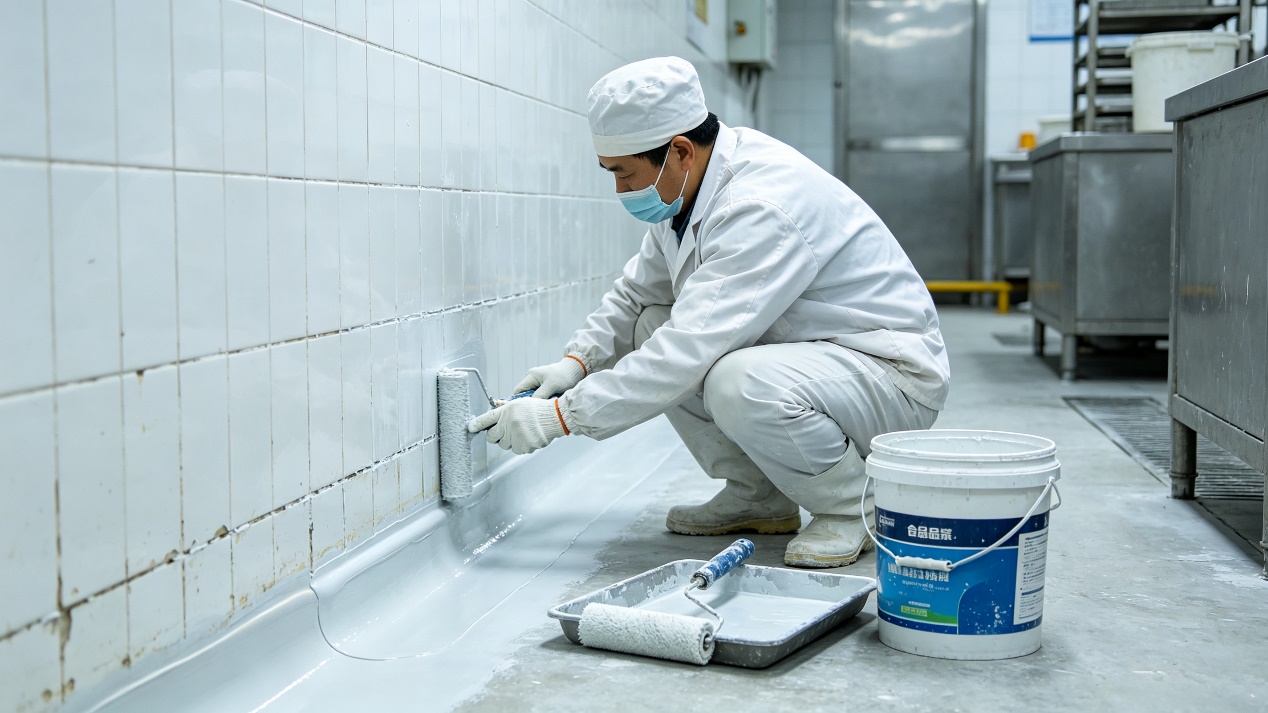
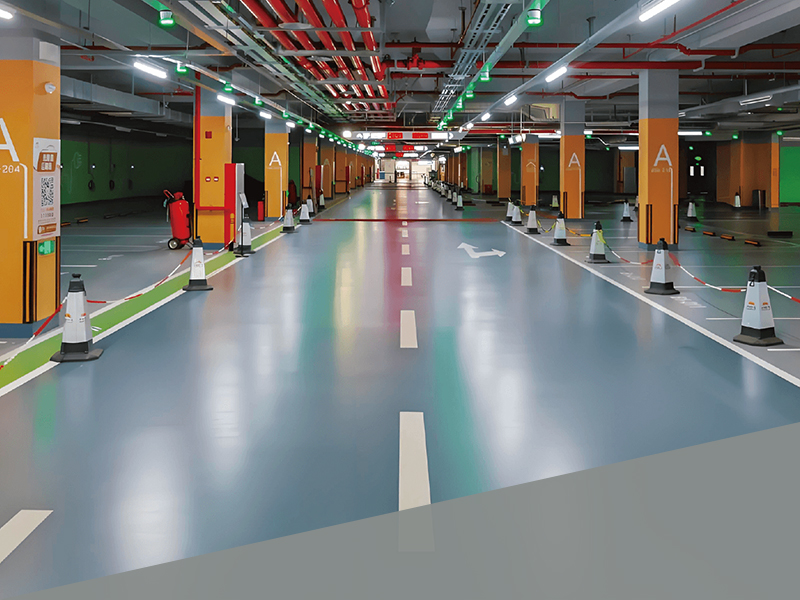
Super-Wear PU Topcoat (Composite Layer) | Enhances existing floor wear resistance, scratch resistance, yellowing resistance; matte finish does not interfere with navigation; strong compatibility | Cannot serve as standalone main flooring; protective upgrade only | Old floor renovation, existing AGV lane reinforcement, extending original floor service life |
PVC Anti-Static Sheet | Smooth surface, stable anti-static performance, sound-dampening, fast installation | Low load-bearing capacity; prone to indentation and edge curling under long-term rolling; many joints prone to dust accumulation | Ultra-light AGVs, laboratories, precision electronics workshops; low-frequency traffic areas only |
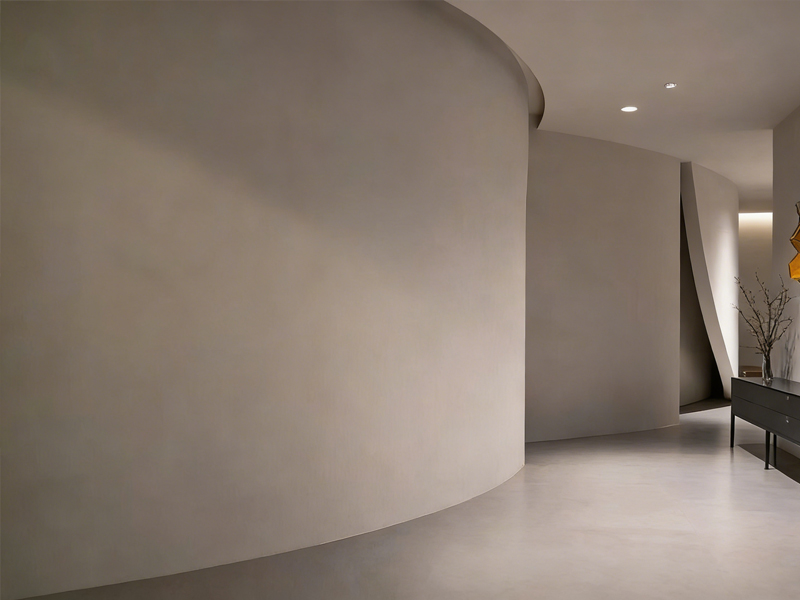
Inorganic Terrazzo | Extreme flatness, high hardness, wear-resistant and durable, compatible with all navigation types | Long construction period, high cost, structural load requirements | High-end unmanned workshops, high-standard smart manufacturing bases, heavy-load + high-cleanliness core passages |
Scenario 1: Ambient-Temperature Light AGV | Light Industry Workshops, E-Commerce Sorting Centers, Regular Warehousing
· Conditions: Load ≤1 ton, ambient dry, visual/laser navigation, moderate traffic frequency
· Recommended: Epoxy self-leveling base + Simon Super-Wear Polyurethane Topcoat
· Rationale: Epoxy creates a highly flat, seamless substrate; matte topcoat prevents reflective interference with sensors; PU topcoat strengthens wear resistance against routine rolling wear, offering outstanding cost performance with easy post-installation cleaning.
Scenario 2: Medium/Heavy AGV + Challenging Conditions | Food, Pharmaceutical, Cold Chain, New Energy Plants
· Conditions: Load 1–8 tons, high-frequency turning, high/low temperature/oil/acid-alkali environments, high cleanliness/anti-static requirements
· Recommended: Simon Polyurethane Mortar Flooring (compressive strength ≥45MPa) + Super-Wear PU Topcoat (anti-static version optional)
· Rationale: PU mortar's strong shear resistance handles friction from AGV turning on the spot; temperature, corrosion, and water/mold resistance meet cold storage and sanitization workshop conditions; seamless structure complies with cleanroom standards; anti-static version accommodates static-sensitive areas — offering the best overall performance.
Scenario 3: Old Plant Smart Retrofitting | Preserve Existing Floor, Add AGVs
· Conditions: Existing floor in acceptable condition, minor wear, insufficient flatness, construction without production shutdown
· Recommended: Local floor repair and leveling + Overall application of Simon Super-Wear PU Topcoat
· Rationale: No need for extensive floor removal; short construction period with minimal production impact; strong coating adhesion rapidly improves flatness and wear resistance, completing AGV floor upgrades at low cost.
Scenario 4: Heavy-Load + High-Cleanliness High-Standard Scenarios | High-End Smart Manufacturing Bases
· Conditions: Heavy AGVs, all navigation types, year-round high-load operation, high appearance and cleanliness requirements
· Recommended: Inorganic Terrazzo Flooring
· Rationale: Maximum flatness, hardness, and wear resistance; seamless design resists dust accumulation; stable long-term appearance — ideal for core areas of high-end unmanned workshops.
Scenario 5: Static-Sensitive Light-Load Scenarios | Precision Electronics, Instrument Laboratories
· Conditions: Light AGVs, low-frequency traffic, strict anti-static requirements
· Recommended: PVC Anti-Static Sheet / Anti-Static Epoxy System
· Rationale: Stable anti-static performance, smooth and quiet surface, meeting basic requirements of precision workshops.
1. Prioritize Flatness Control
For visual and QR code navigation AGVs, strictly enforce a 2m straightedge deviation ≤ ±2mm standard; all expansion joints and cut joints must receive flexible treatment — absolutely no offset allowed, to prevent AGV bumping or jamming.
2. Avoid Blindly Pursuing High-Gloss Finishes
High-gloss floor reflection can interfere with LiDAR and visual recognition systems; uniformly select matte/textured finishes for all AGV areas.
3. Strengthen High-Frequency Turning Zones
AGV turning and zero-radius rotation points experience maximum shear forces — prioritize PU mortar or add PU wear-resistant topcoat to prevent premature wear.
4. Environment Match Trumps Price Comparison
For cold storage, chemical plants, and coastal salt-spray areas, do not use standard epoxy — short-term savings lead to frequent repairs and higher total cost.
5. Consider Construction and After-Sales Together
Prioritize brands with large-scale project and overseas experience, which can ensure both construction precision and long-term technical support with warranty service.
· Light-load, ambient temperature, budget-conscious: Epoxy + Super-Wear PU Topcoat
· Medium/heavy load, high/low temp / cleanroom / corrosive environments: PU Mortar Flooring System is the first choice
· Existing floor upgrade/renovation: Direct application of Super-Wear PU Topcoat
· High-end heavy-load + high cleanliness: Inorganic Terrazzo
· Precision static-sensitive scenarios: Anti-static sheet / Anti-static epoxy
Match your AGV parameters and site environment to the appropriate solution, balancing performance, budget, and long-term maintenance to select the truly suitable AGV flooring.




 cn
cn