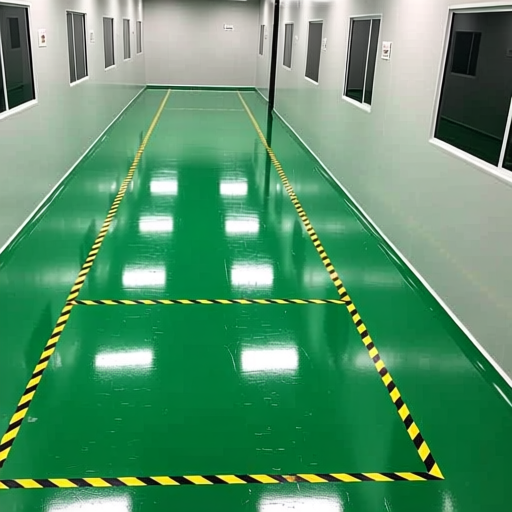
The special environment of meat processing workshops imposes stringent requirements on flooring: blood and oil contamination in slaughter and cutting areas, high-temperature and high-pressure water flow during cleaning and disinfection, extreme temperature differences in cold chain storage, coupled with high-frequency rolling of forklifts and heavy foot traffic. Traditional flooring often faces the predicament of "insufficient slip resistance leading to falls, poor stain resistance making cleaning difficult, and failure to meet hygiene standards resulting in compliance risks".
In accordance with the Hygienic Specifications for Meat Processing Plants (GB 12694-90) and the requirements of the 2025 edition of the international food code CAC/RCP1, factory flooring must meet the mandatory standards of "waterproof and slip-resistant, non-hygroscopic and washable, corrosion-resistant and non-toxic, with a slope of 1-2% (≥2% for slaughter workshops)". In actual operation, ordinary epoxy flooring tends to become brittle and crack at low temperatures and soften after high-temperature steam cleaning; the joints of ceramic tile flooring become sanitary dead corners that trap dirt and grime, eventually leading to excessive bacterial counts; dusting and spalling of cement flooring directly affect product safety.
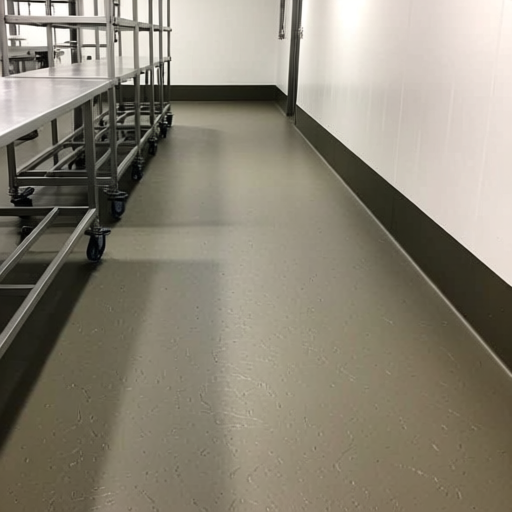
Targeting the core needs of meat processing scenarios, Simon Heavy-Duty CPU M400 Polyurethane Mortar Flooring achieves three breakthroughs in slip resistance, stain resistance and hygiene through material innovation and structural optimization:
CPU M400 adopts a composite structure of "elastic matrix wrapping rigid aggregates", with its surface treated with special anti-slip texture. Its wet slip resistance coefficient reaches R11 level (in accordance with German Standard DIN 51130), which can effectively reduce the risk of slipping for personnel and forklifts even in extremely wet environments mixed with blood and oil. Its thickened coating design of 6-12mm can withstand high-frequency rolling of 15-ton forklifts without damaging the anti-slip texture, making it suitable for AGV robot aisles and heavy-duty equipment areas.
Contaminants in meat processing such as organic acids (lactic acid, citric acid), alkaline cleaning agents (sodium hydroxide solution) and edible oil impose extremely high requirements on the chemical resistance of flooring. CPU M400 can resist strong corrosive media such as 30% sulfuric acid and 40% sodium hydroxide, showing no discoloration or penetration after 24-hour immersion in edible oil, and maintains stable performance after high-temperature steam cleaning (≤150℃), completely solving the pain points of "easy penetration and difficult cleaning" of traditional flooring.
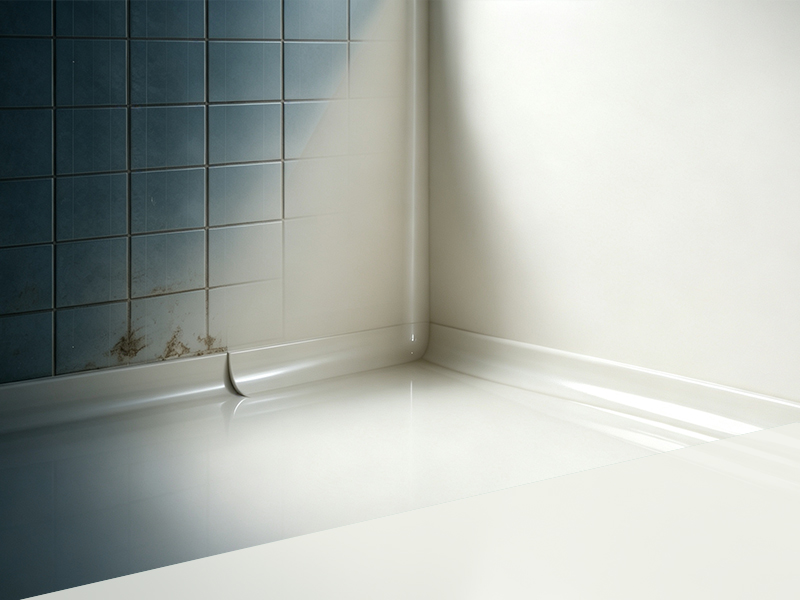
As a product certified by FDA and CFIA for food contact, CPU M400 uses a solvent-free formula with VOC emission ≤30g/L, complying with the environmental standard GB 18581-2020, and produces no pungent odor during construction and use. Its seamless integral coating design combined with arc treatment of wall corners with R≥50mm eliminates sanitary dead corners, achieving a microbial inactivation rate of 99.99% and an Escherichia coli inhibition rate of ≥99% within 24 hours, fully meeting the hygiene requirements of food processing workshops.
Project Overview
Located in East China, the plant covers an area of 8,000 square meters, including slaughter workshop, cutting and processing area, cold chain storage area and cleaning and disinfection area. The original flooring was ordinary epoxy flooring, which had problems such as insufficient slip resistance, local dusting and frequent failure to pass hygiene inspections. CPU M400 was selected as the core flooring material for this renovation project, focusing on solving three core demands: improving the safety of slippery areas, reducing cleaning and maintenance costs, and ensuring hygiene compliance.
Key Construction Technology (Adapted to Meat Processing Scenarios)
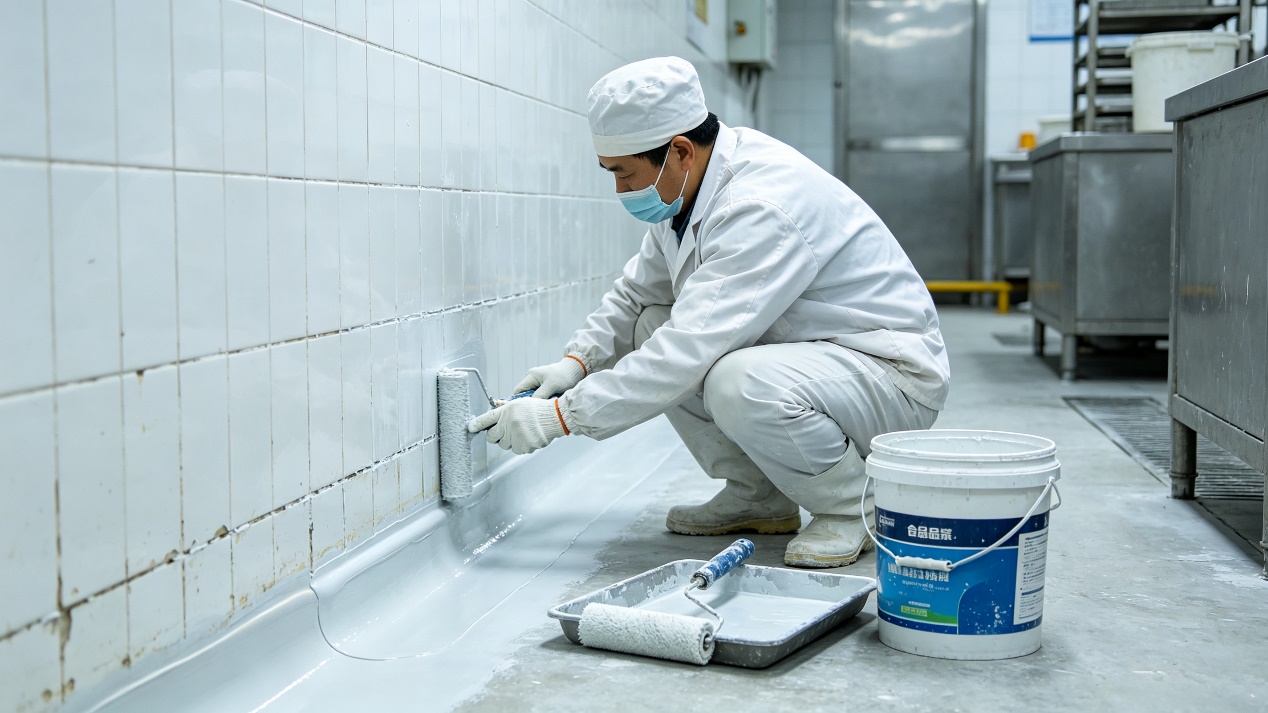
Base Course Pre-Treatment: The concrete base course is treated with a dust-free shot blaster to achieve surface roughness of SP3 level. Oil contamination is removed by high-temperature washing with 60℃ alkaline cleaning agent (pH=10-12) followed by secondary degreasing with acetone, ensuring that the moisture content of the base course is ≤6%. The flooring of the slaughter workshop is treated with a 2.5% slope, open drains are designed with an arc shape, and mesh covers are installed at drainage outlets to ensure smooth drainage without water accumulation.
Layered Construction Process:
Primer Coat: Apply solvent-free epoxy primer with a wet film thickness of 80μm to enhance base adhesion (≥5MPa);
Middle Coat: Polyurethane mortar is mechanically troweled at a ratio of "resin: quartz sand = 1:3" with a thickness of 8mm, followed by 24-hour curing;
Top Coat: Apply elastic polyurethane topcoat by airless spraying with a dry film thickness of 60μm, with two coats applied to ensure uniform coverage;
Joint Treatment: Reserve 5mm expansion joints around equipment foundations and fill them with food-grade elastic rubber strips; strengthen internal and external corners with "one cloth three coats" treatment, using glass fiber cloth with a width of 200mm to eliminate cracking risks.
Curing and Acceptance: Enforce forced ventilation for 72 hours after construction, maintain the ambient temperature at 20±2℃ during curing, and conduct a full range of tests after 7 days: adhesion ≥ Grade 1, Taber abrasion value (500g load) ≤15mg, surface flatness error ≤2mm/2m, and bacterial count in hygiene test ≤10CFU/㎡, fully complying with industry standards.
Safety Aspect: After renovation, the monthly slip accident rate in the workshop decreased from 3-5 to 0, and the driving stability of forklifts was significantly improved;
Maintenance Aspect: The seamless coating combined with food-grade sealing treatment improves daily cleaning efficiency by 40%, reduces the frequency of high-pressure washing from twice a day to once a day, and cuts annual maintenance costs by 60%;
Compliance Aspect: Passed all hygiene tests for 12 consecutive months, with bacterial count stably controlled below 5CFU/㎡, and successfully obtained ISO22196-2011 international antibacterial standard certification;
Durability: After 2 years of use, the flooring shows no dusting, no cracking and no attenuation of slip resistance, with an expected service life of up to 20 years, far exceeding the 5-8 year service cycle of traditional epoxy flooring.
Differentiated Regional Configuration: Select 8-10mm thick CPU M400 for slaughter and cutting areas to enhance slip resistance and impact resistance; match with elastic polyurethane topcoat for cold chain storage areas to resist embrittlement at -40℃ low temperature; add anti-static treatment for laboratory areas, with surface resistance controlled at 10⁶-10⁹Ω.
Key Post-Maintenance Points: Use neutral cleaning agents with pH=7-8 for daily cleaning, avoiding direct contact with strong acids and alkalis; inspect the integrity of expansion joint sealants monthly, and wax and maintain with food-grade polishes quarterly; adopt a four-step repair method of "trimming - grinding - patching - recoating" for local damage to prevent contaminants from penetrating the base course.
Cost-Benefit Analysis: Although the initial investment of CPU M400 (150-250 CNY/㎡) is higher than that of ordinary epoxy flooring, the annual average cost calculated over a 20-year service life is only 1/3 of that of traditional flooring. Moreover, it greatly reduces the loss caused by production suspension for renovation, demonstrating outstanding comprehensive cost-effectiveness.



 cn
cn