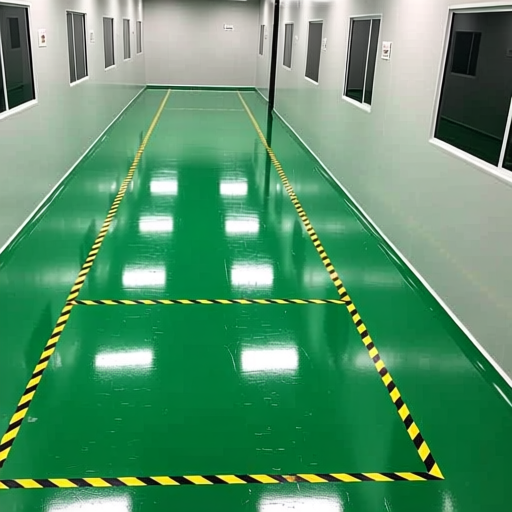
In modern industrial production environments, the load intensity borne by floors is escalating at an unprecedented rate—intensive storage in automated warehouses, 24/7 high-frequency operation of AGV robots, and continuous impact and rolling of heavy machinery. These scenarios impose nearly harsh performance requirements on industrial flooring. According to industry statistics, in over 30% of heavy industrial plants, traditional epoxy or ordinary polyurethane flooring suffers severe wear, cracking, or even structural failure within 3-5 years of service, resulting in millions of yuan in annual maintenance costs and production downtime losses. Against this backdrop, Simon's CPU (Modified Polyurethane) M300 and M400 systems, specially developed for extreme working conditions, are redefining the performance boundaries of industrial flooring with their revolutionary "Triple Reinforced Structure."
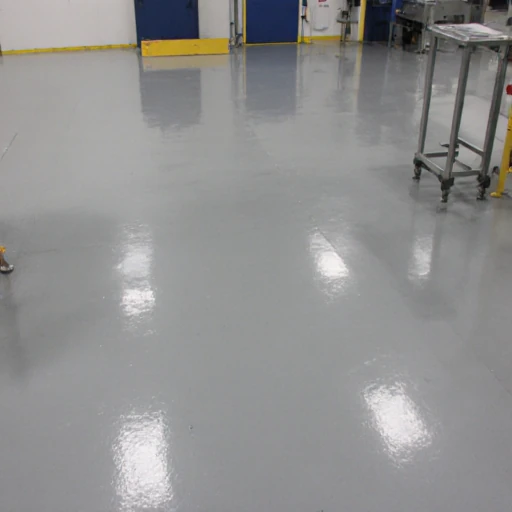
Before delving into the CPU M300/M400 systems, we must understand the real challenges posed by extreme industrial environments to flooring materials:
Dynamic Impact Damage: Frequent drops of heavy components (0.5-2 tons) generate instantaneous impact forces 5-10 times greater than static loads, easily causing brittle materials to crack and peel.
Continuous Rolling Fatigue: 24/7 operating forklifts (especially those with metal wheels) and heavy handling equipment exert constant combined compressive-shear stress, leading to material fatigue failure.
Extreme Wear and Scratching: Metal debris and gravel dragged repeatedly across the floor act like countless micro-cutting tools, wearing down ordinary materials at a rate of 1-2mm per year.
Chemical and Thermal Stress: Leakage of grease and hydraulic oil, along with local high temperatures (up to 80-120℃) generated by equipment operation, accelerate material aging and softening.
The single-performance structure of traditional materials can no longer cope with these multi-dimensional, composite extreme challenges.
The CPU M300 and M400 systems represent not just a simple material upgrade, but a systematic structural engineering innovation. Their core technology lies in the construction of a composite structure with "Toughness Buffer Layer - Rigid Support Body - Ultra-Wear-Resistant Surface" working synergistically.
First Layer: Molecular-Level Toughness Buffer Layer—Countering Impact Damage
Core Technology: Utilizes ultra-high molecular weight, moderately cross-linked polyurethane elastomer as the continuous phase. Its glass transition temperature is designed below -30℃, ensuring excellent toughness even in cold environments.
Mechanism of Action: When impacted by heavy objects, the material absorbs and disperses up to 70% of the impact energy through molecular chain extension and reversible deformation, converting instantaneous impact into a sustained release process. Laboratory falling ball impact tests (1kg steel ball, 1m height) show no cracks on the M400 surface, while traditional epoxy exhibits obvious depressions and radial cracks.
Data Support: Elongation at break ≥40%, elastic recovery rate ≥90% (M400), significantly higher than the 20%-30% of ordinary polyurethane.
Second Layer: Multi-Scale Rigid Support Body—Resisting Continuous Rolling
Core Technology: Innovative "gradient-graded" mineral aggregate system. Precisely combines special aggregates with Mohs hardness ≥7 (such as corundum and silicon carbide) of different particle sizes (0.1mm-3mm) with resin.
Mechanism of Action: Forms a microstructure similar to "reinforced concrete." Polyurethane resin (equivalent to concrete) encapsulates and bonds quartz aggregates (equivalent to steel reinforcement). When subjected to vertical pressure and horizontal shear force, the hard aggregates bear the main load and evenly disperse stress through interfacial chemical bonds. Compressive strength can reach 85MPa (M400), equivalent to the strength of C60 concrete.
Unique Advantage: Excellent fatigue resistance. After 1 million cycles of loading (simulating high-frequency forklift traffic), the residual strength retention rate exceeds 95%.
Third Layer: Microcrystalline Ceramicized Ultra-Wear-Resistant Surface—Ending Wear Consumption
Core Technology: Incorporates nano-ceramic powder and self-lubricating components into the surface layer, forming a "microcrystalline-polymer" hybrid surface through a special process.
Mechanism of Action:
Active Wear Resistance: The surface layer achieves a Mohs hardness of 8.0 (M400), more scratch-resistant than ordinary quartz sand (7.0).
Friction Reduction: Self-lubricating components maintain a surface friction coefficient of 0.4-0.6 (dry state), reducing drag resistance and thus wear caused by friction.
Performance Data: Results from German BAM wear tester (one of the most rigorous standards) show that the wear loss of M400 is <20mg (1000 rotations/1000g load), only 1/5 of that of traditional epoxy flooring.
Although both belong to the CPU heavy-duty series, M300 and M400 have clear distinctions in design positioning to meet the needs of different load levels.
| Comparison Dimension < | CPU M300 (Heavy-Duty Standard Version) < | CPU M400 (Extreme Reinforced Version) |
|---|---|---|
| Design Positioning | High-load production, logistics and warehousing | Extreme heavy load, impact, and wear environments |
| Compressive Strength | ≥70 MPa | ≥85 MPa |
| Flexural Strength | ≥25 MPa | ≥35 MPa |
| Wear Resistance (Taber CS-17, 1000g/1000r) | ≤40 mg | ≤20 mg |
| Applicable Impact Energy | ≤50 J (equivalent to 1-ton weight falling from 0.5m) | ≤100 J (equivalent to 1-ton weight falling from 1m) |
| Continuous Operating Temperature | -30℃ ~ +80℃ | -40℃ ~ +120℃ |
| Typical Application Scenarios | Auto parts assembly lines, e-commerce distribution centers, medium-sized manufacturing workshops | Port heavy equipment maintenance areas, steel mill plate processing areas, aerospace component assembly areas, extra-large automated warehouses |
Case Verification:
An International Auto Parts Factory (Adopting M300): The floor needs to withstand 2-ton AGV pallet trucks operating 24/7. After 5 years of use, the main passages only show slight wear marks with no cracks or peeling. The expected service life can reach 15 years, saving a total cost of over 3 million yuan compared to the original epoxy solution (requiring major repairs every 3 years).
A Large Steel Group's Plate Finishing Workshop (Adopting M400): Withstands the rolling of tens-of-ton steel coil transport vehicles and the impact of high-temperature oxide scale. After 3 years of extreme testing, the floor remains intact overall, requiring only local repairs and avoiding potential major safety risks caused by floor damage.
Choosing the CPU M300/M400 systems brings not only long-lasting and durable flooring but also a systematic improvement in overall production operational efficiency and safety.
Guaranteed Production Continuity: An extremely long maintenance-free cycle (over 10 years between major overhauls) completely avoids production line shutdowns caused by floor renovation, which is crucial for modern industry where production is measured in seconds.
Equipment and Personnel Safety: The flat, sturdy, and high-friction-coefficient floor significantly reduces the risk of heavy equipment overturning and minimizes personnel slip accidents.
Improved Logistics Efficiency: Exceptional flatness (error <2mm within a 2m straightedge) creates conditions for the high-speed and stable operation of AGVs and forklifts, enhancing logistics efficiency.
Sustainability Contribution: The ultra-long service life means less material consumption and construction waste, with a significantly lower whole-life-cycle carbon footprint compared to traditional flooring that requires frequent replacement.
Excellent materials require meticulous construction to achieve their designed performance. The CPU M300/M400 systems impose precise requirements on construction technology:
Base Course Diagnosis and Treatment: The compressive strength of the base concrete must be ≥C30 with no loose materials on the surface. Milling or sandblasting is recommended to achieve a rough and clean surface.
Precise Environmental Control: The ambient temperature during construction should be 15-30℃, the base temperature should be at least 3℃ higher than the dew point temperature, and the humidity should be below 75%.
Precise Material Measurement and Mixing: High-precision electronic scales must be used, with the mixing error of components A and B controlled within ±0.5%. Forced mixers should be used for thorough mixing.
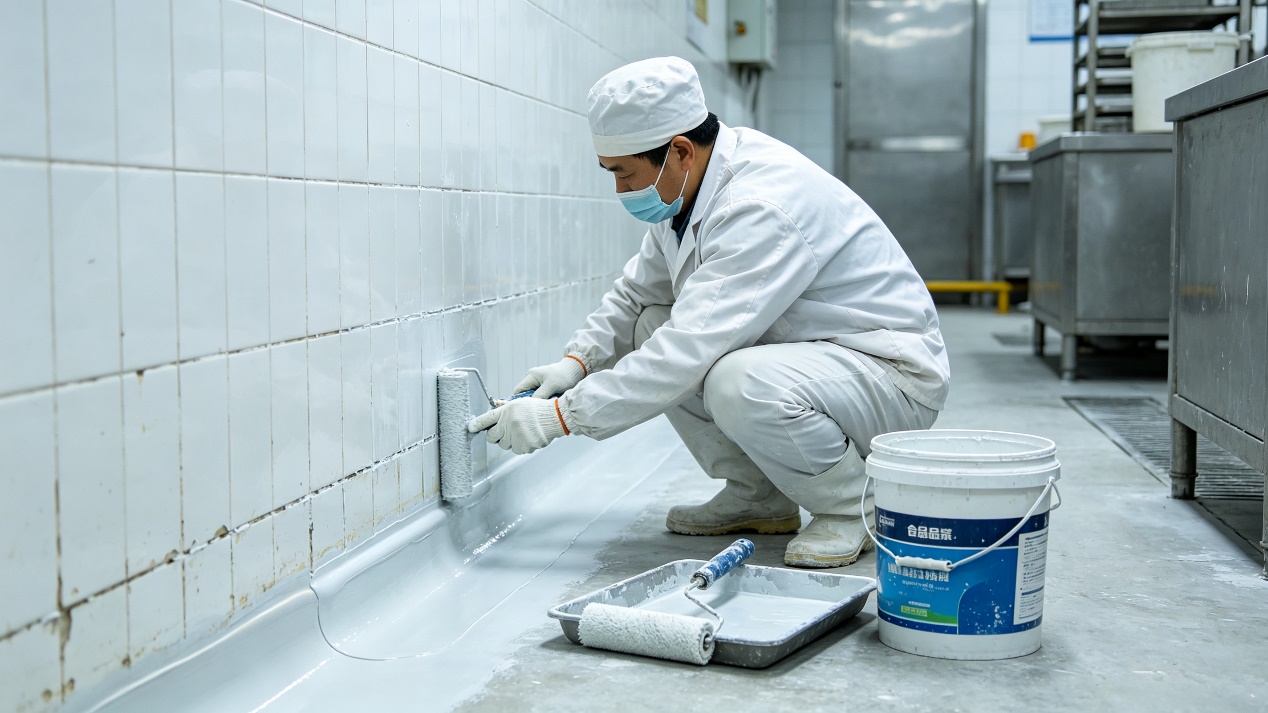
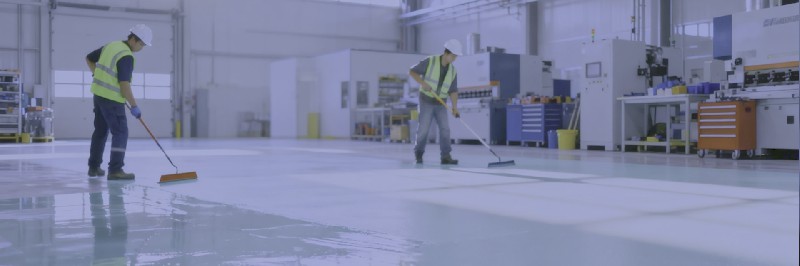
Multi-Layer Composite Construction: Strictly follow the systematic construction process of "primer penetration → intermediate coat leveling and reinforcement → surface layer wear resistance," with each layer reaching the designed thickness (total thickness is usually 6-8mm).
Adequate Curing: After construction, a curing period of at least 7 days is required, during which no loads or contamination are allowed.
In the era of Industry 4.0 and intelligent manufacturing, production equipment and logistics systems are operating at unprecedented intensity and efficiency. As the foundation for all production activities, the load-bearing capacity, durability, and reliability of flooring have become key infrastructure constraining the overall efficiency and safety of factories. Simon's CPU M300/M400 systems, with their innovative triple reinforced structure, provide the strongest and most durable "floor armor" to date for high-load industrial scenarios. They are not just a flooring product, but a long-term strategic investment in production continuity, asset safety, and operational sustainability. When your flooring can withstand extreme tests day in and day out for a decade, your production can truly achieve high efficiency, stability, and peace of mind for the future.



 cn
cn