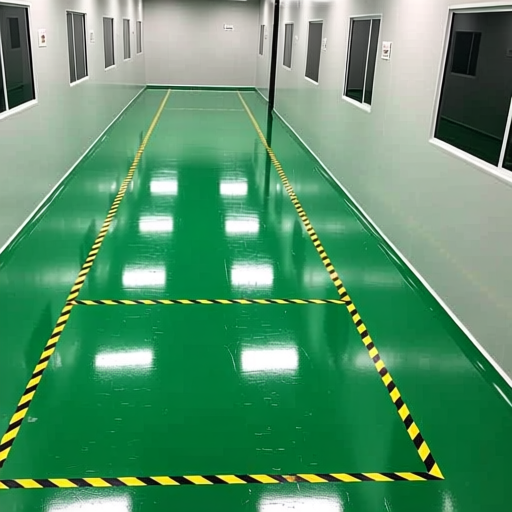
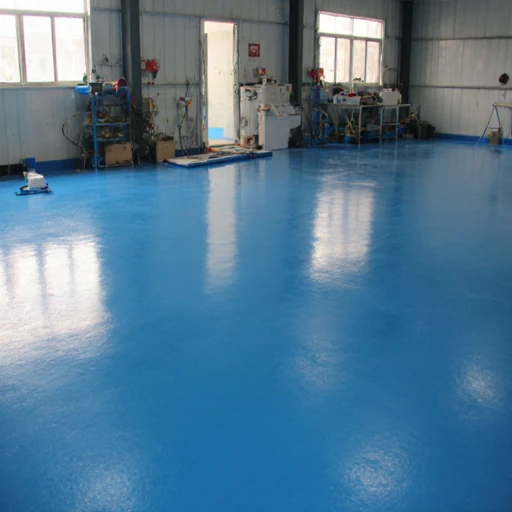
In extreme environments where flooring must simultaneously withstand heavy load impact, chemical corrosion, high-temperature steam, and low-temperature freezing, traditional epoxy or concrete systems often fall short. Yet, Simon's polyurethane mortar system has maintained stable service for over 20 years in thousands of harsh scenarios worldwide. Its secret lies in the microscopic world invisible to the naked eye – a composite structure of "elastic matrix encapsulating rigid aggregates." This structure is not a simple mixture but a precise design in material science.
Magnifying the microstructure of polyurethane mortar ten thousand times reveals an almost perfect "binary composite system":
1. Elastic Matrix: Polyurethane Resin Network
Formed by the reaction of isocyanates and polyols into a three-dimensional cross-linked polymer network, this is the system's "toughness provider." Simon uses special aliphatic isocyanates and polyether polyols, endowing it with the following characteristics:
Dynamic Elasticity: Glass transition temperature below -40°C, ensuring flexibility even in severe cold.
Molecular Repairability: Unique dynamic bond design allows partial recovery of shape after instantaneous impact.
Chemical Stability: Dense cross-linked structure blocks penetration of corrosive media.
2. Rigid Aggregates: Precisely Graded Mineral Fillers
Simon meticulously selects a "multi-scale grading system" composed of materials like silicon dioxide and quartz sand:
Macro Aggregates (1-3mm): Provide primary compressive strength and skeletal support.
Meso Fillers (0.3-1mm): Fill gaps between large aggregates, enhancing compactness.
Micro Fillers (<0.1mm): Nano-sized quartz powder fills micropores, creating an "ultra-densification" effect.
3. Interface Bonding Layer: The Chemically Bonded "Adhesive"
This is Simon's core technology – using silane coupling agents to form "molecular bridges" on aggregate surfaces, enabling chemical bonding between inorganic aggregates and organic resin instead of physical adhesion. The interfacial shear strength can exceed 15 MPa, 3-5 times higher than ordinary physical bonding.
Mechanism One: Impact Energy Conversion
When a heavy object impacts the floor, the force is first absorbed by the polyurethane elastic matrix (elastic deformation can recover 50%-70% of the energy), with the remaining energy uniformly dispersed to the subfloor through the tightly encapsulated aggregate skeleton. This is akin to an "air-spring mattress": the elastic layer cushions, the rigid layer supports.
Mechanism Two: Stress-Induced Redistribution
During thermal expansion/contraction or subfloor cracking, the elastic matrix allows 2-3% deformation while redistributing local stress along aggregate interfaces via the encapsulation effect, avoiding stress concentration leading to cracking. Test data shows this structure can effectively bridge subfloor cracks up to 3mm.
Mechanism Three: Fatigue Damage Self-Inhibition
Under repeated loading, ordinary materials develop cumulative micro-cracks (fatigue damage). Simon's composite structure design forces micro-cracks to propagate around hard aggregates, creating a tortuous path that consumes more energy, significantly delaying fatigue failure. After 10 million cyclic loading tests in the lab, performance retention remains above 85%.
1. Cold Chain Logistics Center (-25°C to Room Temperature)
Challenge: Traditional epoxy becomes brittle like glass at -25°C, shattering under forklift traffic.
Simon Solution: Elastic matrix maintains flexibility at low temperatures, encapsulated rigid aggregates provide load-bearing support. A cold chain center in Heilongjiang shows no cracking or spalling after 16 years of use.
2. Food Processing Plant (Daily High-Temperature Washdown)
Challenge: Daily washdown with 85°C hot water and acid/alkaline cleaners causes thermal stress cycling leading to delamination.
Simon Solution: Combination of polyurethane matrix's heat resistance (up to 120°C) and aggregates' low thermal expansion coefficient results in thermal deformation rate <0.1 mm/m·°C, far lower than concrete's 0.3-0.5. A meat processing plant used for 18 years with twice-daily washdown performs as new.
3. Heavy Equipment Workshop (Impact + Abrasion)
Challenge: Frequent dropping of 5-ton workpieces, abrasion from metal debris.
Simon Solution: Elastic layer absorbs impact, quartz aggregates with Mohs hardness of 7 resist abrasion. Wear tests show cumulative wear after 10 years is <1mm.
| Generation | Structural Features | Durability Improvement | Typical Applications |
|---|---|---|---|
| First Gen | Simple Encapsulation | 5-8 Years | Light-duty Workshops |
| Second Gen | Coupling Agent Enhanced Interface | 8-12 Years | General Food Plants |
| Third Gen | Multi-scale Aggregate Grading | 12-15 Years | Chemical Plants, Cold Storage |
| Fourth Gen | Dynamic Network + Intelligent Response (Simon's Current Tech) | 15-20+ Years | Extreme Environments (e.g., Lithium Battery Workshops, Nuclear Power Auxiliary Areas) |
The breakthrough of Simon's fourth-generation technology lies in introducing "stress-sensing" polymer segments and gradient interface layers. The material not only passively withstands stress but also, to a certain extent, directionally disperses stress, achieving true "intelligent response."
Comparing 20-year lifecycle total cost of ownership (TCO):
Traditional Epoxy System:
Initial Investment: 300 RMB/㎡
Maintenance Cycle: Medium repairs needed every 3-5 years (patching delamination, cracking)
Cumulative Maintenance Cost: ~450 RMB/㎡
Production Loss: 7-10 days downtime per repair
20-year TCO: ~1200 RMB/㎡
Simon Polyurethane Mortar System:
Initial Investment: 600 RMB/㎡
Maintenance Cycle: Preventive maintenance after 15 years
Cumulative Maintenance Cost: ~150 RMB/㎡
Production Loss: Almost negligible
20-year TCO: ~800 RMB/㎡
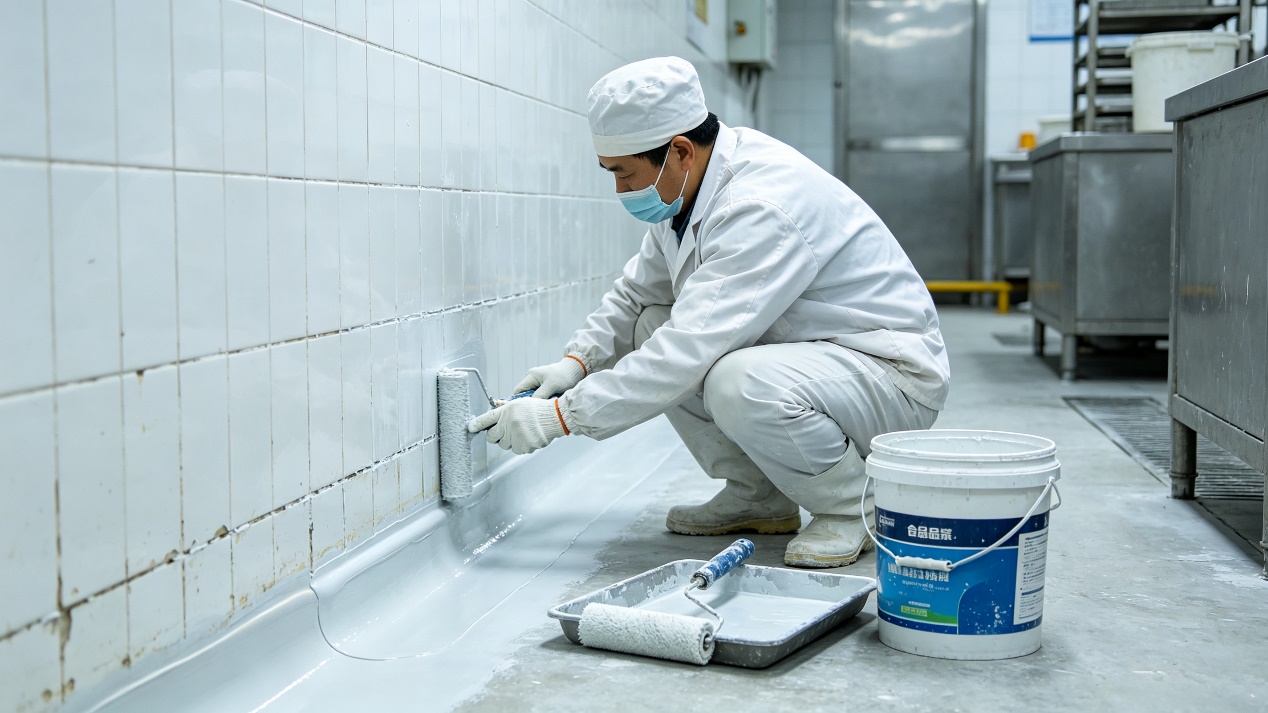
Even the best material requires correct construction to achieve the designed structure:
Precise Proportioning: A/B component mixing error <0.5% to ensure complete chemical reaction.
Staged Mixing: First mix resin and powder to form "pre-encapsulation," then add aggregates, ensuring each aggregate particle is fully encapsulated.
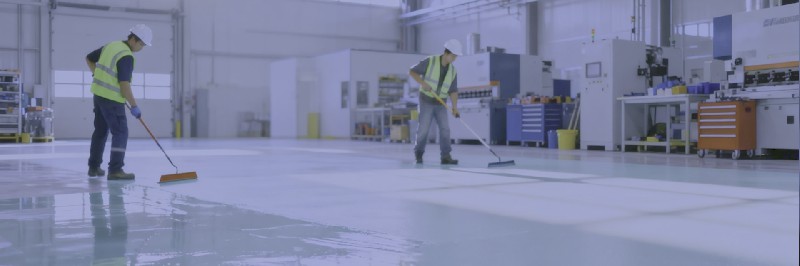
Environmental Control: Construction temperature 10-35°C, humidity <75% to prevent moisture from affecting interface bonding.
Professional Tools: Use Simon-specified notched trowels to ensure uniform aggregate distribution.
The essence of Simon's polyurethane mortar's 20-year durability is not a miracle of a single material but a systematic material structure engineering project. It mimics nature's wisdom – just as collagen and hydroxyapatite in bones, or organic matter and calcium carbonate in seashells – achieving "1+1>2"卓越 performance through the ingenious composite of elasticity and rigidity.
Today, when infrastructure requires full lifecycle consideration, choosing such a material system is not merely selecting a flooring solution but embracing a long-termist technological philosophy. It silently bears every impact of production, resists every round of environmental侵蚀, and interprets what true durability and reliability mean with two decades of stable performance. This is the technical depth Simon conceals beneath every square meter of flooring.



 cn
cn