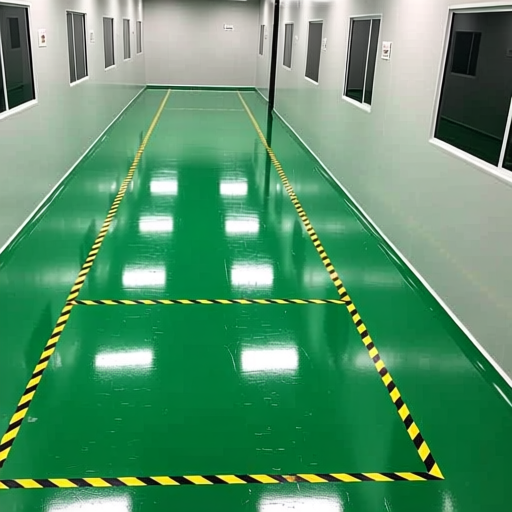
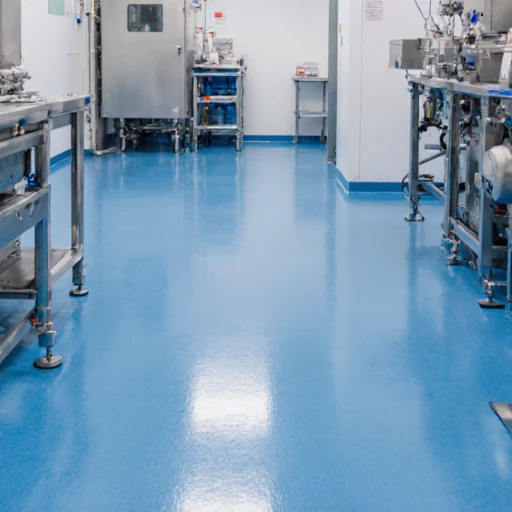
In pharmaceutical workshops, flooring is not merely a foundational load-bearing surface; it is a critical "first line of defense" within the pharmaceutical quality assurance system. The latest appendix to the "Good Manufacturing Practice (GMP)" issued by the National Medical Products Administration explicitly states that flooring in clean areas should possess characteristics such as non-dust generation, ease of cleaning and disinfection, and resistance to chemical corrosion. However, industry survey data indicates that over 90% of pharmaceutical companies focus only on "price" and "basic performance" when selecting materials, severely neglecting the lifeline of "dual certification for antimicrobial properties and environmental protection," thereby planting significant hidden dangers for drug safety and compliant production. The following are three common misconceptions and their professional solutions.
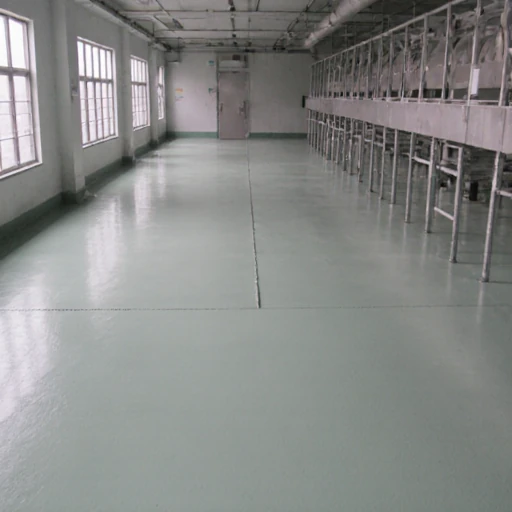
Cognitive Bias: Many companies believe that a "dust-free, sterile workshop" environment is sufficient to ensure floor safety, or simply equate "smooth = easy to clean = antimicrobial."
Real-World Risks:
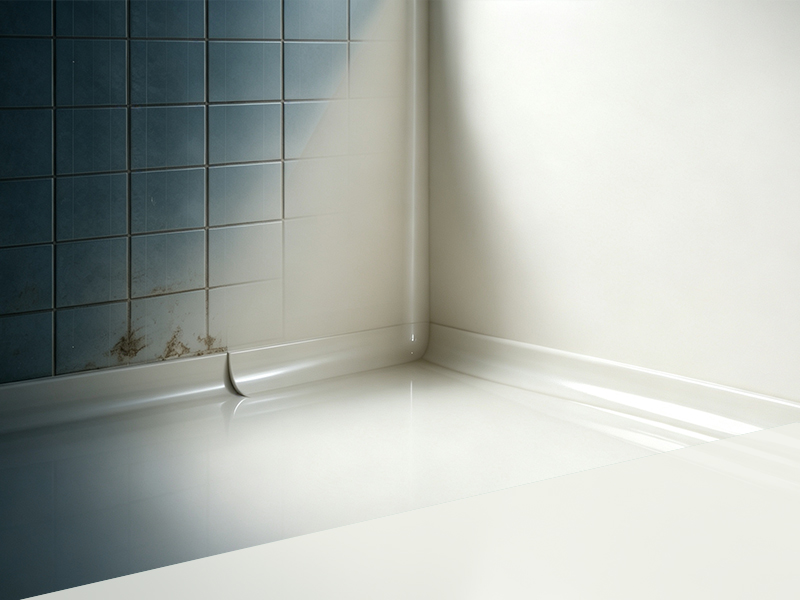
Biofilm Hazard: Smooth surfaces without antimicrobial properties (e.g., ordinary epoxy) can still form invisible biofilms, becoming "sanctuaries" for microorganisms. A well-known pharmaceutical company once had to recall an entire batch of injectables due to超标 Pseudomonas aeruginosa on the floor, resulting in direct losses exceeding ten million.
Poor Tolerance to Disinfectants: Pharmaceutical workshops require daily use of high-concentration酒精, hydrogen peroxide, quaternary ammonium salts, etc. Ordinary flooring is prone to discoloration, softening, and cracking after prolonged exposure, compromising surface integrity and反而 harboring dirt.
Cleaning Blind Spots: Micro-pores (pinholes) generated during the construction of traditional solvent-based flooring become permanent havens for microorganisms and residue.
Core of Professional Material Selection:
Choose flooring systems with dual-efficacy certification for "active antimicrobial properties + disinfectant tolerance."
Certification Requirements: Prioritize products that have passed ISO 22196 (Antimicrobial Activity Testing) with an antimicrobial rate ≥99.9%, and verify their test reports for tolerance to disinfectants commonly used in pharmaceuticals.
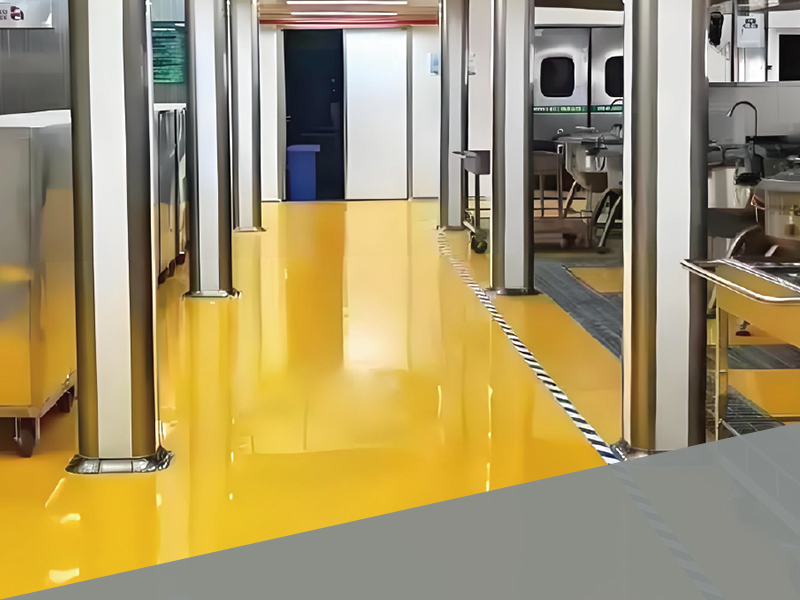
Recommended Solution: Polyurethane Mortar Self-Leveling System, with features including:
Dense and Non-porous: One-time forming, eliminating pinholes and leaving no hiding places for microorganisms.
Built-in Antimicrobial Properties: Leading brands like Simon embed antimicrobial agents (e.g., inorganic silver ions) into the resin matrix through fusion, ensuring持久 antimicrobial efficacy without loss due to wear.
Chemically Bonded Corrosion Resistance: Its polyurethane-quartz composite structure does not react harmfully with disinfectants.
Cognitive Bias: Believing that selecting "low-VOC" or "solvent-free" materials fulfills environmental requirements.
In-Depth Risks:
Invisible Construction Pollution: Some materials may have low VOCs, but their curing agents contain heavy metals or phenolic substances, releasing harmful gases during construction, contaminating HVAC systems, and affecting cleanliness certification.
Waste Disposal Challenges: Waste materials generated from old flooring renovation, if non-recyclable or difficult to degrade, become a hazardous waste disposal burden. A biopharmaceutical factory incurred over a million yuan in additional costs disposing of hundreds of tons of old epoxy waste.
Blind Spot in Continuous Energy Consumption: Dark-colored, high-gloss flooring increases lighting energy consumption, contradicting pharmaceutical factories' energy-saving and carbon reduction goals.
Core of Professional Material Selection:
Establish a full lifecycle environmental assessment system "from cradle to grave."
Certification Requirements: Materials should possess both:
Dual Environmental Certification: China Environmental Label (Ten-Ring Certification) and related International Green Building LEED / WELL Gold-level certifications.
Carbon Footprint Verification Statement: Require suppliers to provide carbon footprint reports based on the ISO 14067 standard.
Recommended Solution: Choose suppliers offering full lifecycle services, such as Simon's "Green Flooring Solution", with features including:
Bio-based Raw Materials: Some resins are sourced from renewable plants, reducing reliance on fossil fuels.
Cold Application Technology: Reduces energy consumption by over 60% compared to traditional热 application.
Old Flooring Recycling Program: Provides material回收 and resource reuse services.
Cognitive Bias: In new construction or renovation projects, material selection is often handled solely by采购 or engineering departments based on technical specifications, without early involvement from Quality Assurance (QA) and validation departments.
Compliance Risks:
Missing GMP Conformity Documentation: Flooring materials, as part of facility infrastructure, require material certificates, compatibility (with cleaning/disinfecting agents) validation reports, and Installation/Operation Qualification (IQ/OQ) documents – all essential for GMP certification. Missing documents can lead to certification delays or failure.
Uncontrolled Changes: Any changes in construction processes or environmental conditions, if unrecorded and unevaluated, may affect final flooring performance, constituting a GMP "deviation."
Missing Supplier Audits: Flooring suppliers and their contractors should be treated as suppliers of critical materials and services. Failure to audit their quality systems poses high risks.
Core of Professional Material Selection:
Integrate flooring selection into the "GMP Quality Management and Validation System."
Key Actions:
Early Cross-Departmental Review: Establish a review team including Engineering, Quality, Production, and EHS during the design phase.
In-depth Supplier Audit: Audit content should cover: raw material traceability, production stability, construction SOPs, past pharmaceutical project cases, and after-sales service (especially配方 consistency guarantees for repair materials).
Demand a Complete Validation Support Package (VSP): Require suppliers to provide a detailed Validation Support Document List before contract signing and include it as a contract appendix.
To completely avoid the aforementioned misconceptions, companies are advised to follow this four-step approach:
Step One: Define Requirements with a Checklist
Create a "Critical Requirements Checklist for Pharmaceutical Cleanroom Flooring," which must include:
Mandatory Items: Compliance with GMP Annex 1 (Sterile Products) or relevant appendix requirements.
Certification Items: Antimicrobial test reports (ISO 22196), environmental certifications (Ten-Ring, LEED), heavy metal content test reports.
Performance Items: Wear resistance (≥0.03g, Taber test), chemical resistance (list all cleaners and disinfectants planned for use in the workshop), anti-static properties (resistance value 1x10⁶~1x10⁹Ω, if required).
Service Items: Validation document support, permission for on-site supplier audit, 10+ years warranty and project cases.
Step Two: Pre-emptive Supplier Auditing
Do not evaluate brands alone; you must evaluate the localized technical support and construction team. Conduct on-site audits, focusing on:
Training and qualifications of construction personnel (especially in cleanroom construction规范).
Dedicated dust-free construction equipment.
Emergency response and repair plans.
Step Three: Empirical Validation with a Sample Section
Before正式 construction, insist on creating a sample section of no less than 20㎡ in a non-core or模拟 area within the factory, and perform:
Simulated testing of actual cleaning and disinfection processes (over 30 days).
Third-party testing of the sample section's antimicrobial performance and cleanliness.
Joint acceptance by relevant departments.
Step Four: Standardized Document Delivery
Clarify in the contract that the deliverables are not just the project, but a complete "traceable documentation system", including:
Original Manufacturer's Certificate of Analysis (CoA) and Material Safety Data Sheet (MSDS) for all materials.
Records of key parameters during construction (temperature, humidity, mix ratio, interlayer间隔时间).
Performance test reports upon completion (flatness, antimicrobial properties, anti-static, etc.).
Systematic maintenance manual.
The selection of flooring for pharmaceutical workshops is a serious decision concerning drug safety, patient lives, and corporate survival. It has long transcended the traditional category of building materials, evolving into a systematic project integrating material science, microbiology, compliance validation, and risk management. The true cost does not lie in the material price per square meter, but in whether the ultimate goal of "zero pollution, zero deviation, zero recall" can be achieved throughout the entire product lifecycle. Avoiding the three major misconceptions above, adhering to the baseline principle of "dual certification for antimicrobial properties and environmental protection," and building a closed-loop quality management system covering the entire lifecycle is the most solid and intelligent "pit-avoidance" path for pharmaceutical companies when selecting flooring. Because here, every square meter of the floor silently safeguards the safety and hope of the next pill and the next injection.



 cn
cn